FLOP Wants AI to Come With a Receipt
Arthur Hayes’s FLOP Network is testing whether AI agents can verify the GPU work they pay for.
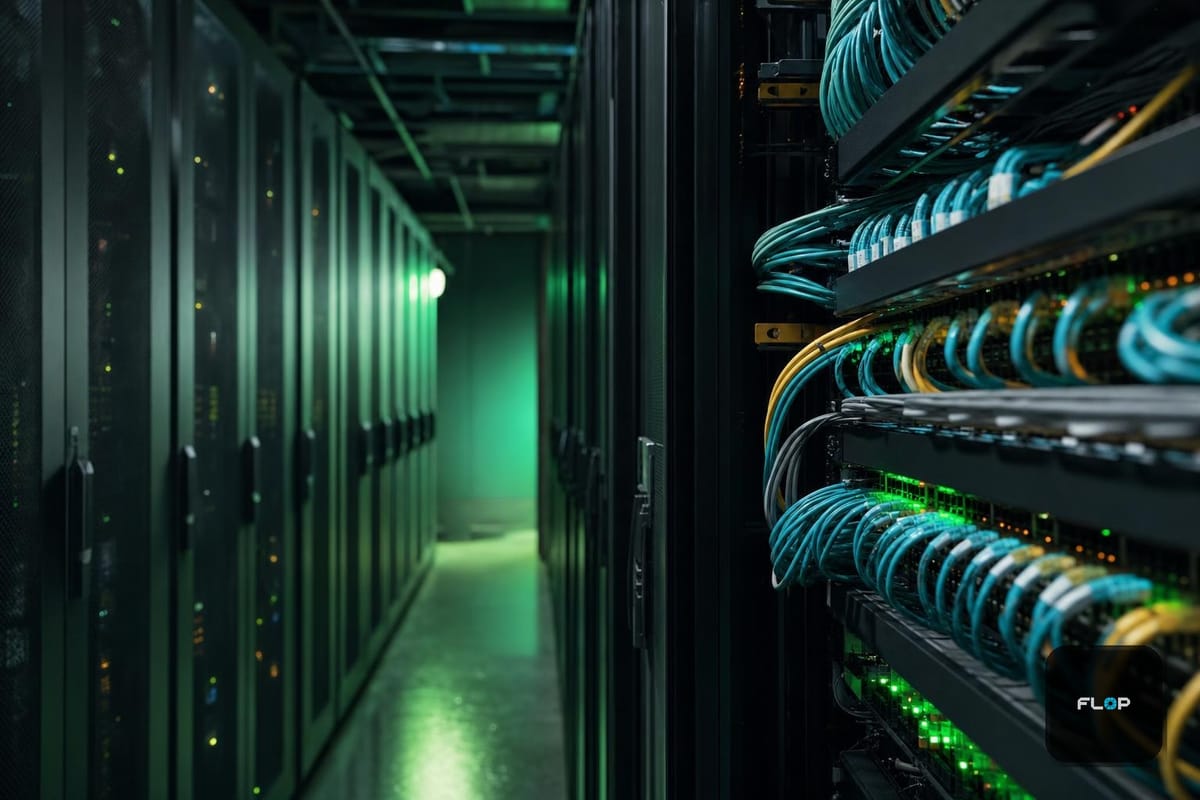
Arthur Hayes’s network is using its public Testnet to explore whether AI agents can verify the GPU work they pay for.
Imagine an investment team asks an AI agent to summarize 100 earnings calls. The agent sends the work to several GPU providers and comes back with a report and a bill. If one provider charged for a particular model and quietly ran a cheaper one, the report could still read fine.
FLOP Network is building a marketplace where agents can buy inference, the work of running a trained model on a request, and pay against evidence of what ran. Its public Testnet opened on November 24 with six founding validators. It’s an early trial, and the test tokens carry no monetary value.
Three days after launch, Flop Labs reported about 450 outside miner registrations, eight registered models and GPU capacity equivalent to roughly 230 NVIDIA H100s. Founder and CEO Arthur Hayes said that capacity was “barely used.” The Testnet now gives FLOP a way to see whether agents can put that supply to work. Flop Labs’ November 27 update · Hayes’s comments on utilization
What FLOP is trying to verify
GPU operators, called miners on FLOP, run the models off-chain. In FLOP’s design, a miner records compact fingerprints of intermediate calculations during inference. A separate checker can replay part of the work and compare its own fingerprints to the miner’s to look for model substitution. Validators finalize the chain that records the settlement. The draft protocol also describes how disputes would be resolved when the evidence is contested. For a buyer, the mechanism addresses which model actually ran. The quality of its answer still has to be evaluated on its own. FLOP’s draft technical specification
What Natsai tested
We brought up a keyless observer in Europe and a separate archive node in the US. Both run the official Testnet node image and verified chain spec. The European observer matched FLOP’s public RPC at finalized blocks 158,327 and 158,340 on either side of a restart. It kept the same peer ID, and we reached its peer port from another network. We posted the host-check receipt as part of our application for a validator seat.
On the US archive, we checked that applications could read historical chain state and subscribe to new finalized blocks over WebSocket. An archive is useful when an application needs to reproduce a result against the state at a particular block. We’ve offered the node to FLOP for RPC pool testing. Natsai’s Testnet application and results
What buyers and investors should watch next
An institution could use a common record to reconcile the model it requested, the work delivered and the amount it paid across several providers. To make that useful, FLOP needs to show how much verification adds to the cost and time of a request, and what happens when a buyer disputes a bill. For investors, the signal to watch is whether customers come back when they’re spending their own money.